
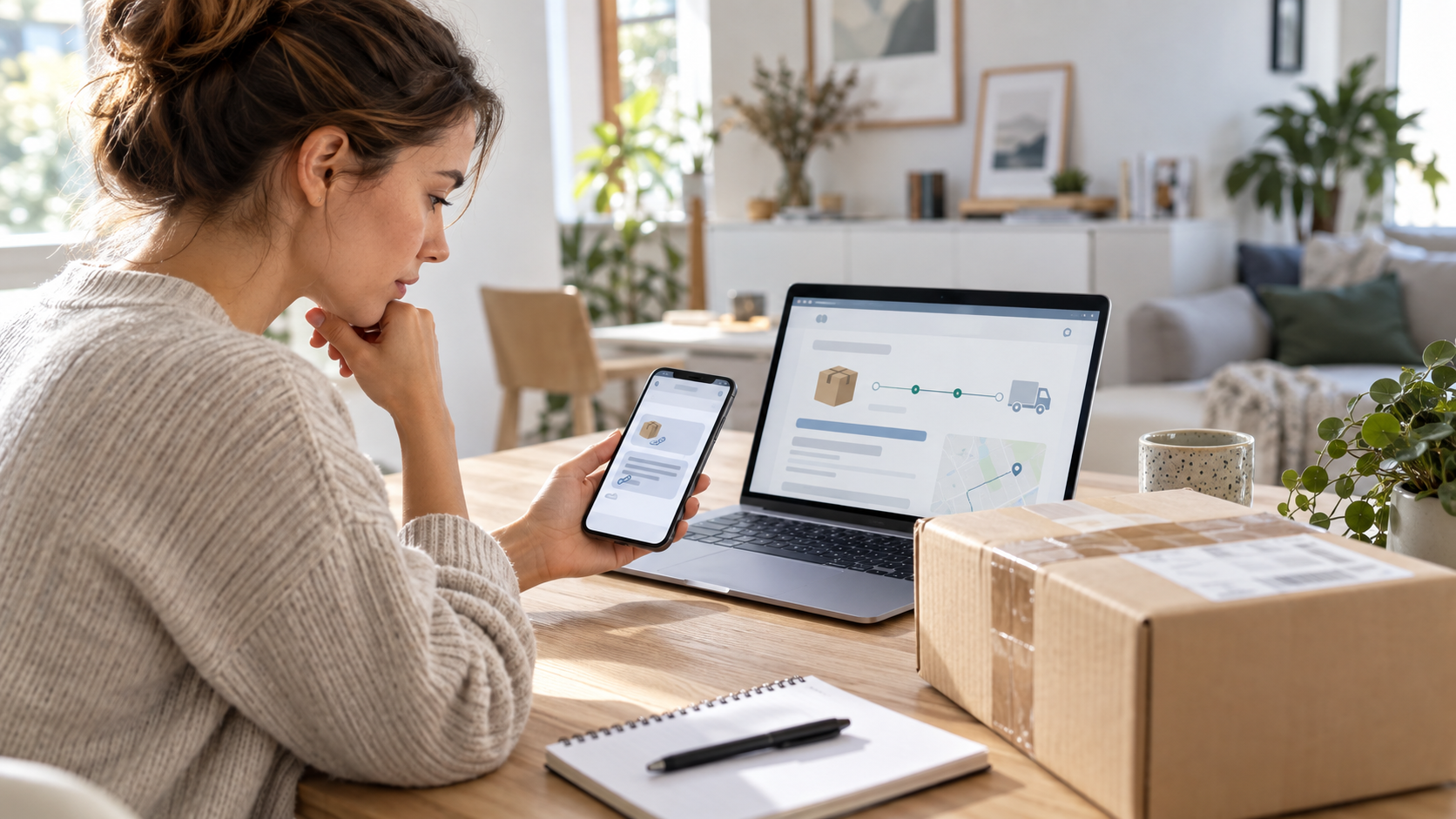
A transaction becomes more risky when you have to pay before receiving and inspecting the product.
This does not mean that every advance payment or delivery arrangement is unsafe. The important thing is to understand who you are paying, what you are paying for, and what should happen after the payment.
Why advance payment requires extra care
When meeting in person, a buyer can usually inspect the product before handing over the money.
With advance payment, the order is reversed:
money first → product later.
If something goes wrong, recovering the money may be more difficult.
Before paying, ask why an advance payment is required.
Possible reasons may include:
- reserving the product;
- paying delivery costs;
- ordering a custom product or service;
- another specific part of the transaction.
The explanation should make sense.
When to be especially careful
Take extra care if the seller:
- asks for full payment before you see the product;
- demands an urgent deposit;
- refuses other reasonable transaction options;
- keeps changing the amount;
- repeatedly tells you to pay immediately;
- refuses to show the product;
- will not provide additional photos.
For example, you find a phone at a price far below similar listings and the seller says:
“Another buyer is interested. Send me 500 lei now and I'll hold it for you.”
Do not transfer money only because you are afraid of losing the offer.
Check the seller and the product first.
A useful question before paying a deposit
Ask yourself:
If I never get this money back, am I prepared to lose it?
If the answer is no, look for a safer way to complete the transaction.
If the product will be delivered
Agree on the conditions in advance:
- who pays for delivery;
- when the product must be paid for;
- whether it can be inspected on arrival;
- whether the contents of the package can be checked;
- what happens if you refuse the delivery;
- what rules apply to the delivery service.
Do not agree to a process that you do not understand.
If necessary, open the delivery company's official website yourself and check its rules.
Be careful with payment and delivery links
You may receive a convincing message:
“I have already arranged the delivery. Use this link to confirm it.”
The page may look almost identical to the website of a well-known courier, bank, or marketplace.
That does not mean it is genuine.
If someone sends you a link:
- Do not automatically enter your card details.
- Check which website the link actually opens.
- Close it if anything looks unusual.
- Open the official website or app yourself.
- Check whether the transaction or shipment exists there.
Finding the official service independently is safer than relying on a link sent by a stranger.
Banking details you should not share
Do not give a seller or buyer:
- your PIN;
- CVV/CVC;
- internet banking password;
- banking app password;
- one-time verification codes.
Be especially careful if someone says:
“I've sent you the money. Tell me the code you received by SMS.”
Someone does not need your banking password or verification code simply to transfer money to you.
Check who receives the money
Before confirming a transfer, look at the recipient's name if your bank displays it.
If you have been speaking with one person but are suddenly asked to transfer money to somebody else, ask why.
There may be a perfectly reasonable explanation, but it is better to clarify it before paying.
Do not rely only on screenshots
A screenshot showing “payment completed” or “parcel sent” is not proof that an operation actually happened.
Check independently:
- whether the money appears in your banking app;
- whether the shipment exists in the courier's official system;
- whether the operation is visible in your official account.
Three common situations
1. An urgent deposit
The product is unusually cheap and the seller asks for money immediately to reserve it.
Before paying:
- ask why the price is so low;
- request additional photos;
- ask about the condition;
- suggest an in-person inspection;
- ask why the deposit is necessary.
2. A delivery link
The seller sends a page that looks like a well-known delivery service.
Do not immediately enter your card details.
Open the company's official website or app independently and verify the information.
3. A banking code to “receive money”
Someone says they have sent you money and asks for the code from your SMS.
Do not provide it.
One-time banking codes are used to confirm actions involving your account.
What to check immediately before paying
Make sure that:
- you know exactly what you are paying for;
- the product exists;
- the seller has answered the important questions;
- the amount matches what was agreed;
- you know who will receive the money;
- the delivery terms are clear;
- you have independently checked the official service;
- you are not entering card details on a suspicious page;
- you are not being pressured to pay immediately.
If the conditions suddenly change before payment, stop and ask why.
Product first or money first?
If you can inspect the product in person, the clearest sequence is:
product → inspection → decision → payment.
If payment must be made in advance, reduce the risk as much as possible:
- ask more questions;
- request additional photos or video;
- check the seller;
- compare similar listings;
- verify the delivery service independently.
If something does not feel right
You do not have to prove that a seller is dishonest.
You can simply avoid paying until the situation is clear.
You can:
- ask more questions;
- request a video;
- suggest meeting in person;
- check the delivery service independently;
- contact your bank through an official channel.
There are usually other listings available.
The main rule
Before sending money, you should clearly understand:
who you are paying, what you are paying for, and what happens after payment.
If one of those points is unclear, stop and verify it before continuing.
